 Beginner
The Best Way to Learn Touch Typing as an Adult (Realistic 30-Day Plan)
Most touch-typing guides are written as if you are a ten-year-old with unlimited free time. As an adult, you probably have twenty spare minutes…

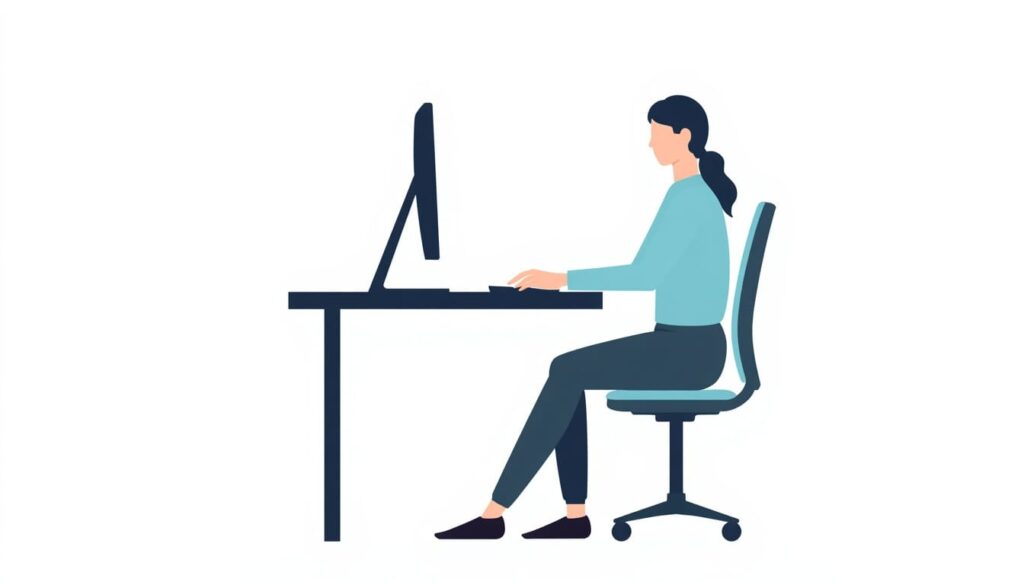
Fast typing is not much use if it leaves your wrists aching by lunchtime. If you spend hours at a keyboard — for work, study, or gaming — how you sit and position your hands matters just as much as how quickly you type. Good ergonomic typing reduces strain, keeps you comfortable for longer, and helps you maintain a relaxed, accurate technique. This guide to ergonomic typing covers hand posture, desk setup, and simple habits to help you avoid wrist pain.
A quick note: this article is general information, not medical advice. If you already have persistent pain, numbness, or tingling, please see a qualified healthcare professional.
The goal is a neutral, relaxed position — a core principle of ergonomics — where your hands are not bent, twisted, or straining. Keep these principles in mind:
Your posture starts with your setup. A few adjustments make a big difference over a long day:
| Element | Recommended setup |
|---|---|
| Chair height | Feet flat on the floor, knees around 90 degrees |
| Screen height | Top of the monitor at or just below eye level |
| Screen distance | About an arm’s length away |
| Keyboard position | Flat or tilted slightly away, elbows relaxed at your sides |
| Mouse | Close to the keyboard so you are not reaching |
| Back support | Sit back into the chair; support your lower back |
Even with a perfect setup, staying in one position for hours is hard on your body and can contribute to repetitive strain injury. These small habits help:
Interestingly, good typing technique and ergonomic typing habits reinforce each other. A relaxed touch-typist who keeps their fingers on the home row and does not pound the keys naturally types in a more comfortable, sustainable way. If your technique still feels tense or effortful, our typing lessons can help you build a smoother, lighter style, and a relaxed round of typing games is a good way to practise staying loose.
Keep your wrists straight and floating in line with your forearms, fingers gently curved over the home row, and use a light touch. Avoid bending your wrists up, down, or resting them hard on the desk while typing.
Set up your desk so your elbows sit near 90 degrees, keep your wrists neutral, take short breaks every 20 to 30 minutes, and use a soft keystroke. If pain persists, see a healthcare professional.
The top of your screen should be at or just below eye level, about an arm’s length away, so you can look at it without tilting your head up or down.
Yes. A relaxed touch-typist who keeps a light touch and stays anchored on the home row usually types more comfortably than someone who tenses up and pounds the keys.
Practise a relaxed, comfortable technique with our free typing lessons, then test how it feels on the typing test.
BeginnerMost touch-typing guides are written as if you are a ten-year-old with unlimited free time. As an adult, you probably have twenty spare minutes…
 Typing Games
There are two very different ways to practise typing, and people often argue about which one is better. On one side sits the classic…
 Technique
Everyone makes typing mistakes. The problem is not the occasional typo — it is the same mistakes, made over and over, that quietly cap…